
10 Creative Ways to Propagate Your Favorite Plants at Home
- MakaylaKeene

- Aug 8, 2024
- 2 min read
Updated: Sep 21, 2024
Propagation is a fascinating process that allows plant enthusiasts to grow their collection cost-effectively while also gaining a deeper understanding of plant biology. There are several methods and benefits of propagation, each with its unique advantages and techniques. By engaging in propagation, plant lovers have the opportunity to witness the fascinating process of new life emerging from a single plant.
Here are 10 creative ways to propagate plants at home:
1. Leaf Cuttings:
One of the most common propagation methods, especially for plants with large leaves such as caladiums and fiddle leaf figs. Simply cut a healthy leaf and place it in water or soil to encourage root growth.
2. Stem Cuttings:
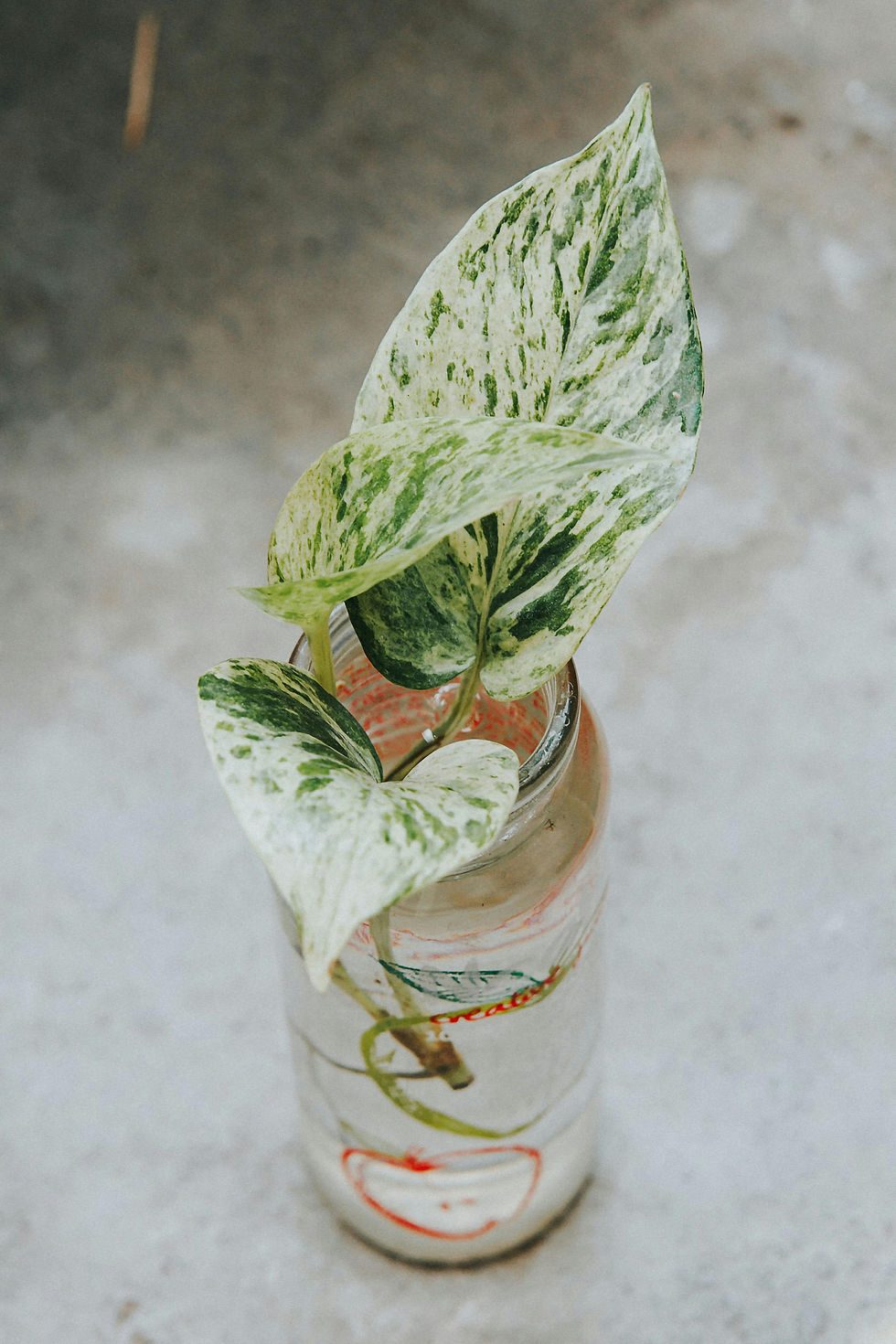
Perfect for plants like pothos and snake plants, stem cuttings involve cutting a portion of the stem with at least one node and placing it in water or soil until roots develop.
3. Air Layering:
Ideal for plants with woody stems like rubber trees and dracaenas, air layering involves making a cut on a stem, wrapping it in moss and plastic, and waiting for roots to form before separating it from the parent plant.
4. Division:
This method works well for plants that have multiple stems or offsets, such as spider plants and snake plants. Simply separate the new growth from the parent plant, making sure each division has roots attached.

5. Root Division:
Similar to division, root division involves separating a plant at its root system. Plants like bamboo palms and peace lilies can easily be propagated this way by dividing the root ball and replanting individual sections.
6. Offset Propagation:
Plants like aloe vera and haworthias produce offsets or pups that can be removed and planted separately to create new plants.
7. Layering:
For plants with flexible stems like philodendrons and spider plants, layering involves burying a portion of the stem in the soil while it is still attached to the parent plant until the roots develop.
8. Water Propagation:
Many plants, including spider plants and monstera, can be propagated by placing cuttings in a jar of water until roots appear, then transferring them to the soil.

9. Seed Propagation:
Although it might be more time-consuming compared to other techniques, cultivating plants from seeds can be an enjoyable and fulfilling experience. Collect seeds from your favorite plants like succulents and herbs and plant them in soil according to their specific requirements.
10. Grafting:
Experienced plant lovers can experiment with grafting, a method that involves attaching a cutting from one plant onto another to produce a distinctive hybrid. Grafting is commonly used to propagate plants such as roses and fruit trees.
Experimenting with different propagation methods can help you learn more about your favorite plants and add a personal touch to your indoor jungle. Whether you're a beginner or a seasoned gardener, propagating plants at home is a fun and sustainable way to grow your collection.
Happy propagating!
Precautionary Statement: Wet Your Plants Blog and its employees are not responsible for the use, misuse, or damage caused by the application or misapplication of products or information mentioned in this document.


Comments